
Office Disinfecting: Can a Deep Clean Stop Illness Spreading Around the Office?
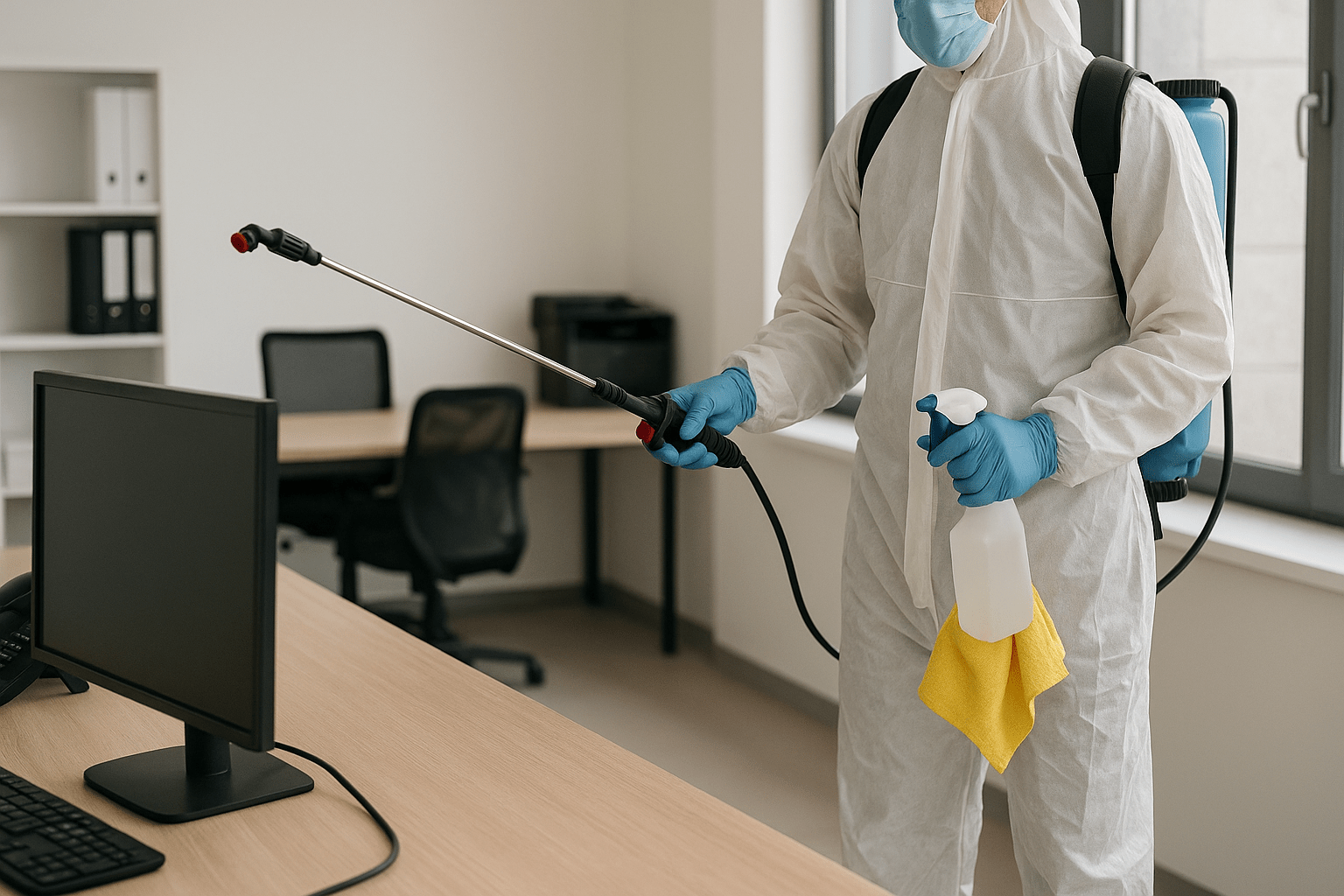
Cleaning ≠ disinfecting: the difference, and why it matters
Let’s clear up something most people mix up: cleaning and disinfecting are not the same thing.
Cleaning = removing visible dirt. The floor shines, the desk is dust-free, the bathroom looks tidy. But germs? You can’t see them, and they’re still there.
Disinfecting = killing the microorganisms (bacteria, viruses, fungi) on surfaces. The surface may look exactly the same, but it’s far safer.
An office that’s cleaned but not disinfected looks good and still spreads illness. An office that’s disinfected but not cleaned won’t get clean either: the disinfectant can’t reach the surface through a layer of grime. You need both. Always.
7 surfaces you must disinfect every day
These are the spots that collect the most germs in an office, and the ones most “standard” cleaning routines skip:
- Door handles. Everyone touches them, nobody thinks about them. The handle on the bathroom, the meeting room, the front entrance: each one is a first point of transfer.
- Elevator buttons. Fifty people a day press the same button. With fingers that just touched food, a nose, a phone.
- Keyboards and mice in shared areas. The reception computer, a hot-desk station, the meeting-room PC: all of them pass germs from one hand to the next.
- The coffee machine. The handle, the buttons, the drip tray: warm, damp, and full of organic residue. A paradise for bacteria.
- The toilet flush button. Everyone presses it, before they wash their hands. And washing? Only some people bother.
- Faucets. You turn them on with dirty hands, wash, then turn them off and carry the dirt straight back onto your hands.
- Railings and handrails. On the stairs, in the corridors, beside heavy doors. Everyone grabs them, nobody cleans them.
When you need extra disinfecting
Day to day, disinfecting the touch points once a day is enough. But some situations call for more:
Flu season (November to March): more illness means a higher risk of spreading it. It pays to step disinfecting up to twice a day.
After an employee falls ill: was someone sick? Give their area an extra round: desk, keyboard, chair, phone.
After an event or conference: a lot of outside visitors came through the office, which means a lot of new germs. Do a full disinfecting afterward.
Epidemic or outbreak: when the Ministry of Health issues an alert, you push disinfecting to its maximum level.
Disinfectants: what works and what’s marketing
Not everything labeled “anti-bacterial” actually works. Here’s what matters:
What works:
- 70% alcohol: effective against most bacteria and viruses. Evaporates quickly and leaves no residue.
- Quaternary ammonium products: common in professional disinfecting. Effective and pleasant to use.
- Hydrogen peroxide (H2O2): odor-free disinfecting that’s friendlier to the environment.
What doesn’t:
- The “anti-bacterial spray” from the supermarket: usually too low in concentration.
- “Disinfecting” wet wipes: better than nothing, but no substitute for professional disinfecting.
- UV light: sounds advanced, but in practice its effect is limited to whatever the light hits directly.
CleanTeam | Disinfecting as part of the standard service
At CleanTeam, disinfecting the touch points is part of every cleaning visit. Not an add-on, not an option. Every door handle, button, and shared surface gets disinfected on every visit. During illness season we step it up automatically, without you having to ask.
CleanTeam | Phone: 053-5934745
Office cleaning and disinfecting services →